A purging procedure can work perfectly on first shift and produce completely different results on second shift.
One operator may know exactly how much purging compound to use, when to change temperatures, and what signs indicate that the machine is clean. Another may rely on experience, guesswork, or whatever procedure was passed down from the previous operator.
That makes purging difficult to measure—and even harder to improve.
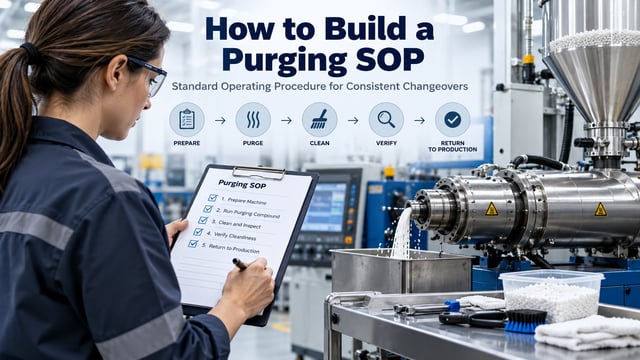
A well-designed standard operating procedure (SOP) helps turn purging from an operator-dependent activity into a repeatable process.
The goal is not to create a complicated document nobody uses. A good purging SOP should make it easier for operators to answer a few basic questions:
When should I purge? What material should I use? How much should I use? What steps should I follow? And how do I know when I am done?
Here are the key elements to include.
1. Define When the Purging Procedure Should Be Used
Start by defining the situations that trigger the SOP.
Purging procedures may be used for different reasons, including:
- Color changes
- Material changes
- Shutdowns and startups
- Carbon or black-speck contamination
- Preventive cleaning
- Machine maintenance
- Screw pulls
- Preparing equipment for extended downtime
Those situations may require different procedures.
For example, a routine material change should not automatically use the same procedure as a machine experiencing persistent carbon contamination.
An effective SOP should therefore identify which problem the procedure is designed to solve.
This also prevents operators from using the same purge process for every situation simply because it is familiar.
2. Identify the Machine and Process Conditions
Purging results depend heavily on processing conditions.
The SOP should document the information operators need before beginning the purge, such as:
- Machine or line
- Process type
- Previous resin
- Next resin
- Previous color
- Next color
- Processing temperature
- Purging compound or grade
- Approximate purge quantity
- Other critical machine conditions
The amount of detail will vary by plant.
The objective is not paperwork for its own sake. The objective is to capture the variables that can explain why the same procedure produces different results on different machines.
If a purge works consistently on one press but struggles on another, these details can help identify the difference.
3. Specify the Correct Purging Compound
“Use purging compound” is not specific enough for an SOP.
Different processing temperatures, resins, machines, and cleaning objectives may require different purge technologies or grades.
The SOP should clearly identify the approved purging compound for that process.
If several options are used, make the selection criteria easy to understand.
For example:
Routine color change → approved grade A
High-temperature resin → approved grade B
Heavy contamination → approved grade C
The exact procedure should always follow the recommendations for the selected purge grade and the requirements of the processing equipment.
The goal is to remove unnecessary decision-making from the operator during the changeover.
4. Establish a Repeatable Purge Quantity
One of the easiest ways to create inconsistent purging results is to use an undefined amount of material.
If the procedure simply says:
“Add purge until clean”
one operator may use 10 pounds while another uses 30.
Instead, establish a starting quantity based on the successful procedure for that specific process.
Then document it.
That doesn't mean the quantity can never change. A difficult contamination issue may require more material than a routine changeover.
But operators should begin from a known baseline instead of guessing each time.
Over time, tracking purge quantity can also reveal opportunities to reduce waste without sacrificing cleaning performance.
5. Write the Procedure in the Order the Operator Actually Performs It
The best SOP is usually the one an operator can follow without interpreting it.
Avoid long paragraphs.
Use numbered steps that match the actual sequence at the machine.
For example:
- Complete the production run.
- Remove or reduce the previous production resin according to the approved procedure.
- Confirm the required processing conditions.
- Introduce the specified amount of purging compound.
- Follow the approved machine procedure for the selected purge grade.
- Observe the purge material for contamination or residual color.
- Continue until the established endpoint is reached.
- Introduce the next production material.
- Record the time and material required to reach acceptable production.
The actual process should be tailored to the machine, resin, purge grade, and plant procedures.
But the format should remain simple.
An operator should be able to glance at the SOP and know what happens next.
6. Define What “Clean” Means
This may be the most overlooked part of a purging SOP.
When does the operator stop?
If the answer is:
“When it looks good”
the procedure is still subjective.
Instead, establish an endpoint appropriate to the application.
That could include:
- No visible previous color
- No black specks
- No observable contamination
- Stable extrusion
- Acceptable material appearance
- A defined number of clean shots
- First acceptable production part
The endpoint does not need to be complicated.
It simply needs to be clear enough that two operators are likely to make the same decision.
7. Record Time, Material, and Results
A good SOP does more than standardize the process.
It creates data.
At minimum, consider recording:
Changeover time
Purge quantity
Scrap generated
Time to first good part
Any contamination or unusual conditions
You do not need to turn every changeover into a laboratory study.
But a few basic measurements can tell you whether the process is improving.
They also make troubleshooting much easier.
If a procedure normally requires 15 pounds of purge and suddenly requires 40, there is probably something worth investigating.
Without a baseline, that difference may go unnoticed.
8. Create a Simple Way to Document Exceptions
Even a strong SOP cannot anticipate every production problem.
Machines wear.
Resins change.
Temperatures change.
Contamination occurs.
Operators should therefore have a simple way to record when the standard procedure did not produce the expected result.
That might include:
- Additional purge required
- Recurring contamination
- Unusual pressure
- Extended startup
- Material bridging or feeding issues
- Unexpected color carryover
- Maintenance involvement
Over time, those notes can expose patterns.
If the same machine repeatedly requires extra cleaning, the problem may not be the SOP at all. It may point to equipment condition, low-flow areas, processing conditions, or another mechanical issue.
9. Train Operators on the “Why,” Not Just the Steps
An SOP is more effective when operators understand why the steps matter.
For example, explaining why a particular quantity is used makes it less likely that someone will arbitrarily double it.
Explaining why a certain endpoint matters helps operators recognize when something unusual is happening.
Training doesn't need to be lengthy.
Even a short explanation of the objective behind each major step can improve consistency.
Experienced operators can also provide valuable feedback when an SOP is being created.
They know where real-world procedures differ from what is written on paper.
10. Review the SOP When the Process Changes
A procedure written five years ago may no longer reflect today's process.
Review the SOP when there are meaningful changes to:
- Production resin
- Color requirements
- Equipment
- Tooling
- Purging compound
- Processing temperatures
- Changeover frequency
- Quality requirements
You should also revisit the procedure when performance changes.
If changeovers are suddenly taking longer or contamination is becoming more frequent, the SOP is a useful place to start troubleshooting.
What Does a Good Purging SOP Look Like?
A useful purging SOP should be:
Specific enough to be repeatable.
Operators should know what material, quantity, conditions, and procedure to use.
Simple enough to follow.
The document should support the operator, not slow the operator down.
Measurable.
The plant should be able to determine whether the procedure is working.
Adaptable.
Different machines or purge situations may require different versions.
Current.
The SOP should reflect the process actually being used today.
The ultimate goal is consistency.
When the same changeover is performed on Tuesday night, Wednesday morning, or Saturday afternoon, the outcome should not depend entirely on who happens to be running the machine.
Frequently Asked Questions
Why is a purging SOP important?
A purging SOP helps standardize the changeover process so operators use consistent materials, quantities, settings, and procedures. That can improve repeatability and make purge performance easier to measure.
Should every machine use the same purging SOP?
Not necessarily. Machine design, resin, temperatures, processing conditions, and cleaning objectives can differ. Plants may benefit from a common SOP structure with machine- or process-specific instructions.
What should be included in a purging SOP?
At minimum, document when the procedure applies, the approved purging compound, process conditions, purge quantity, procedural steps, endpoint criteria, and basic results.
How do you know when a purge is complete?
The endpoint should be defined before the purge begins. Depending on the application, it may be based on color removal, absence of contamination, stable material flow, or acceptable production quality.
How often should a purging SOP be updated?
Review the procedure whenever equipment, materials, processing conditions, or quality requirements change—and whenever purge performance begins to decline.
Make Purging Repeatable
A good purge procedure should not live only in the head of your most experienced operator.
Documenting the process creates a common starting point for every shift and makes it easier to identify opportunities to reduce downtime, scrap, and unnecessary material use.
If your plant is developing or improving its purging procedures, Asaclean’s technical team can help evaluate your application, recommend an appropriate purging approach, and identify ways to make the process more consistent.
Need help standardizing your purge process? Talk with an Asaclean purging expert or use the Grade Selection Guide to identify the right starting point for your application.








Comments