



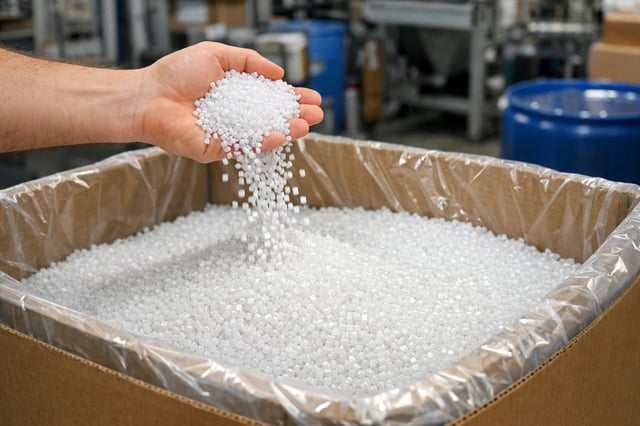
Resin price volatility is nothing new in plastics processing. But when supply disruptions tighten availability and drive costs upward, the financial impact of scrap, downtime, and inefficient changeovers becomes much more significant.
What may have been a manageable loss at lower resin prices quickly becomes a major cost driver when material costs rise. For processors, this shifts the focus from output alone to process efficiency and material utilization.
In high-cost environments, the question is no longer just how much you produce—it’s how much you waste along the way.
Why Rising Resin Costs Change the Economics of Scrap
Every pound of scrap represents lost material, lost time, and lost margin. When resin prices increase, that loss compounds quickly.
Scrap is most commonly generated during:
- Color changes
- Material transitions
- Startups and shutdowns
- Contamination events
At lower resin prices, processors may tolerate longer purge cycles or higher startup scrap. But as material costs rise, those same inefficiencies can significantly impact profitability.
Reducing scrap is one of the fastest ways to offset rising resin costs without increasing production volume.
The Hidden Cost of Changeovers
Changeovers are one of the largest sources of waste in plastics processing. Whether switching colors or materials, the transition period often produces unusable parts while the system stabilizes.
Without an effective cleaning strategy, processors may rely on extended flushing with production resin. This approach is both time-consuming and material-intensive, especially when working with higher-cost resins.
As resin prices increase, inefficient changeovers become more expensive in two ways:
- More material is consumed to reach clean production
- More time is required before acceptable parts are produced
Improving changeover efficiency directly reduces both scrap and downtime.
Why Purging Compounds Matter More in High-Cost Environments
Purging compounds are designed to remove residual resin, colorants, and contamination more effectively than production resin alone. This becomes especially valuable when material costs are elevated.
Instead of using large amounts of virgin resin to clean the machine, a properly selected purging compound can:
- Reduce the amount of material required during changeovers
- Shorten the time to reach stable production
- Improve part quality by removing contamination more completely
In volatile resin markets, these improvements translate directly into cost savings.
Scrap Reduction Starts with a Cleaner Process
Contamination is a leading cause of scrap, particularly during transitions. Residual material left in the screw, barrel, or hot runner system can create defects such as black specks, streaking, or color inconsistency.
A cleaner process reduces the likelihood of these issues.
By incorporating purging compounds into both changeovers and preventative maintenance routines, processors can maintain cleaner equipment and reduce the frequency of scrap-generating events.
This is particularly important when running engineering resins or clear materials, where defects are more visible and less tolerable.
Faster Startups, Lower Material Loss
Startup scrap is another area where rising resin costs have a direct impact. The longer it takes to reach stable production, the more material is wasted.
Effective purging helps ensure that machines start clean, allowing processors to reach acceptable parts more quickly.
This reduces:
- Startup scrap volume
- Time to production
- Overall material consumption
In a high-cost resin environment, even small improvements in startup efficiency can deliver meaningful savings.
A Simple Way to Protect Margins
When resin prices rise, processors often look for ways to reduce cost through purchasing or pricing strategies. While important, these approaches are not always within immediate control.
Process efficiency, however, is.
Reducing scrap, improving changeovers, and minimizing downtime are all actionable steps that can be implemented quickly. These improvements not only offset rising material costs but also strengthen long-term operational performance.
Conclusion: Efficiency Becomes a Competitive Advantage
Resin price volatility is likely to remain a reality for plastics processors. In these conditions, efficiency is no longer just an operational goal—it is a competitive advantage.
By focusing on scrap reduction and improving changeover performance, processors can protect margins even when material costs rise.
Purging compounds play a key role in this strategy by enabling cleaner machines, faster transitions, and more consistent production.
When resin costs increase, the value of every pound matters. Reducing waste is one of the most effective ways to stay ahead.
If your team is dealing with tough resin transitions or temperature swings, we can support you with a customized purge protocol. Request a free sample or schedule a consultation with one of our purging experts today.





Comments