For automotive molders, a single contaminated lot is never just a scrap problem. When you are running parts on an OEM-approved program, contamination puts on-time delivery, part appearance, and your standing with the customer all on the line at once.
Whether you are molding structural components in glass-filled polypropylene, under-hood parts in flame-retardant nylon, or Class-A appearance parts where a single black speck triggers a reject, the cost of contamination in automotive is higher than in almost any other industry. The parts are more expensive, the resins are more demanding, and the tolerance for defects is close to zero.
This is where a disciplined purging strategy stops being a maintenance nice-to-have and becomes a way to protect the program itself.
Why Contamination Is So Costly in Automotive Molding
Automotive is one of the most demanding environments in plastics processing, and several factors compound the cost of any contamination event.
The resins are engineered and expensive. Glass-fiber and mineral-filled polypropylene, nylon grades with flame retardants and other additives, and modified PPE all carry a higher material cost than commodity resins. Every scrapped shot represents more lost value, and these materials are also more prone to leaving behind residue and carbon that can plague the next run.
The parts are held to tight quality standards. OEM programs come with detailed specifications for dimensional accuracy, surface finish, and structural performance. A contaminated part is not just an aesthetic issue; on a structural or safety-related component it can be a functional failure.
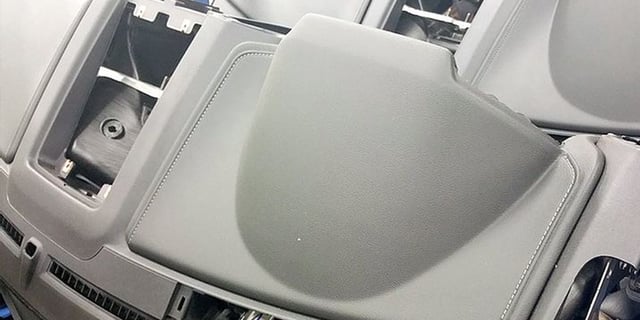
Appearance parts leave no margin for error. On interior trim, exterior components, and other Class-A surfaces, a black speck or a streak of previous color is an automatic reject. Contamination that a less demanding application might tolerate is fatal here.
Downtime cascades through the schedule. Automotive molders run tight, high-volume schedules with limited slack. A contamination event that forces an unplanned changeover, a screw pull, or a rerun can ripple through the production plan and put delivery commitments at risk.
Put together, these factors mean that the same contamination that costs a commodity molder a little scrap can cost an automotive molder a rejected lot, a missed shipment, and a difficult conversation with the customer.
Where Contamination Comes From on the Automotive Floor
Contamination in an automotive molding operation usually traces back to a handful of recurring sources.
Carbon Buildup and Degradation
High processing temperatures, long residence times, and frequent color or material changes all encourage polymer to degrade inside the screw, barrel, and hot runner. Over time this degraded material breaks loose as black specks and streaks, often at the worst possible moment during a production run.
Difficult Material Transitions
Switching between filled and unfilled grades, between nylon and polypropylene, or between very different viscosities is challenging. Residual material left behind in low-flow areas contaminates the next job and drives up startup scrap.
Color Changeovers
Automotive palettes include deep blacks, grays, and highly loaded pigments that cling to the flow path. Incomplete color removal shows up as off-color parts and rejected startup shots.
Glass and Mineral Fillers
Reinforced grades behave differently from unfilled resins during cleanout. The fillers can be abrasive and the residue harder to fully displace, which makes a purpose-built purging approach more important, not less.
How Purging Compounds Protect Program Quality
A purging compound is engineered to do one thing production resin cannot: actively clean the screw, barrel, hot runner, and other melt-flow components rather than simply pushing contamination further downstream.
For automotive molders, that translates into several concrete protections for the program.
Cleaner transitions between demanding grades. A purging compound removes the previous material more completely, so a switch from a filled grade to a natural or from nylon to polypropylene does not carry contamination into the next set of approved parts.
Removal of black specks and carbon before they reach the part. Routine and targeted purging clears degraded polymer out of the system before it breaks loose during a production run, protecting appearance-critical surfaces.
Faster, more reliable startups. By reaching stable, contamination-free production sooner, molders reduce the volume of startup scrap on high-value resins and get to good parts faster.
Fewer screw pulls. Keeping equipment cleaner through regular purging reduces the frequency of labor-intensive manual cleaning that pulls a press out of the schedule.
The net effect is a more stable, more predictable process, which is exactly what an OEM-approved program demands.
Preventative Purging: The Automotive Advantage
The molders who get the most out of purging compounds treat purging as preventative maintenance, not as an emergency response.
In a high-volume automotive operation, waiting until contamination shows up in a part means the damage — scrap, downtime, a possible quality escape — is already done. A preventative approach flips that logic. By purging at planned points — at shutdown, before a critical color or material change, and on a regular schedule during long production runs — molders keep the flow path clean and head off contamination before it can reach an approved part.
The payoff is consistency. Batch-to-batch, shift-to-shift, and run-to-run, a preventative purge program helps hold the stable process window that tight automotive tolerances require. For a molder whose reputation with an OEM depends on delivering conforming parts on time, that consistency is worth far more than the modest cost of the purging compound it takes to protect it.
Matching the Purge to the Material
Because automotive molders run such a wide range of engineered resins, the right purging approach depends on the material and the challenge:
- Glass-filled and mineral-filled polypropylene benefit from grades formulated to displace filled residue and carbon without leaving their own deposits behind.
- Nylon and other high-temperature grades call for purging compounds rated for the higher processing temperatures these materials require.
- Appearance and Class-A parts demand thorough color and residue removal, where the choice between mechanical and chemical purging depends on the specific defect being chased.
The best way to match the purge to the process is to evaluate the specific grades, equipment, and contamination challenges in your operation rather than reaching for a one-size-fits-all solution.
Conclusion
In automotive molding, contamination is not a minor inconvenience — it is a direct threat to expensive parts, tight quality standards, and the OEM relationships that depend on them. A disciplined purging strategy, and especially a preventative one, protects program quality by keeping the flow path clean, removing carbon and color before they reach the part, and holding the consistent process window that approved programs require.
For molders running high-value resins on demanding programs, purging is one of the most cost-effective forms of insurance available.
Frequently Asked Questions About Automotive Purging Compounds
Why do automotive molders need purging compounds?
Automotive molders run expensive engineered resins on programs with tight quality and appearance standards. Purging compounds clean the screw, barrel, and hot runner more effectively than production resin, protecting high-value parts from contamination, black specks, and color carryover.
Can purging compounds clean glass-filled polypropylene?
Yes. Glass-filled and mineral-filled grades can leave behind abrasive residue and carbon that are difficult to remove with production resin alone. A purging compound formulated for filled materials helps displace that residue and reduce contamination in the next run.
How does purging reduce scrap in automotive molding?
By removing contamination and reaching stable production faster, purging compounds reduce startup scrap, prevent black-speck and color-related rejects, and shorten changeovers — all of which cut the amount of scrapped material on high-value automotive parts.
Is preventative purging worth it for high-volume automotive production?
For most high-volume operations, yes. Preventative purging keeps equipment clean and heads off contamination before it reaches an approved part, protecting the consistency and on-time delivery that OEM programs require.
Not Sure Which Purging Compound Is Right for Your Automotive Program?
Every operation is different. The best purging solution depends on your resins, equipment, contamination challenges, and program requirements.
If you are dealing with black specks on appearance parts, difficult transitions between filled grades, or startup scrap on high-value programs, our purging experts can help.
Request a free 10-minute purging consultation here, and schedule your trial of Asaclean® today.
Claim your FREE 10-minute consultation with our Purging Experts now and unlock the benefits. Schedule your consultation here!







Comments