Most plastics processors know to purge during color or material changeovers. But what about machines running the same resin for days or weeks? Or equipment sitting idle over a long weekend?
Knowing when to purge can be just as important as choosing the right purging compound.
Waiting until black specks, color streaks, or rejected parts appear means contamination may already be affecting production. On the other hand, purging unnecessarily can increase material consumption and downtime.
The goal isn't to purge as often as possible. It's to purge at the right moments to keep production running efficiently.
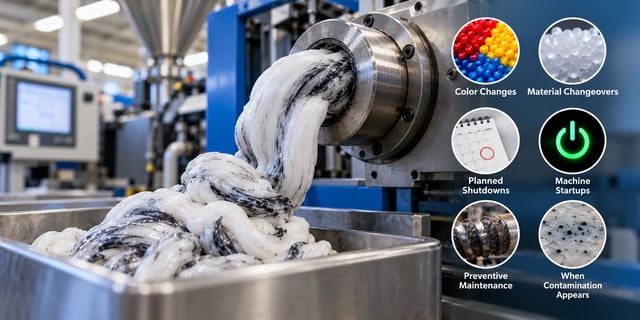
Here are six situations when purging should be part of your production strategy.
1. During Color Changes
Color changes are one of the most common applications for purging compounds, particularly when transitioning from dark colors to lighter or transparent materials.
Residual pigments can remain in the barrel, on the screw, or in other areas of the processing equipment. As the next resin moves through the machine, these deposits can gradually release and contaminate otherwise acceptable parts.
Simply running additional production resin through the machine may eventually clear the color, but it can also generate unnecessary scrap and extend changeover time.
When to purge: During color changes, especially when transitioning between significantly different colors or producing parts with strict appearance requirements.
A properly selected Asaclean® purging compound can help remove residual color more efficiently than relying on production resin alone.
2. During Material Changeovers
Material changeovers introduce additional challenges because different resins have different processing characteristics.
Some materials are more difficult to displace from the machine, while others are particularly sensitive to prolonged heat exposure.
Changing between materials such as polypropylene, ABS, polycarbonate, or nylon can require careful attention to residual resin and processing temperatures.
Remaining material from the previous run can contaminate the next resin, potentially contributing to defects, degradation, or processing instability.
When to purge: Whenever changing resin types, particularly when transitioning between materials with different processing temperatures or properties.
For more challenging transitions, selecting an Asaclean grade compatible with the materials, equipment, and temperature range is essential.
3. Before Planned Shutdowns
A machine that runs cleanly on Friday afternoon can still create problems when production resumes Monday morning.
When residual resin remains inside heated processing equipment, prolonged heat exposure can contribute to material degradation and carbon formation.
This can lead to black specks, additional startup scrap, and delays in returning to production.
One preventive approach is to seal the machine with an appropriate thermally stable purging compound before shutdown.
Asaclean® U Grade, for example, can be used for shutdown and sealing applications within its recommended operating conditions.
Instead of leaving production resin inside the machine, the purging compound helps prepare the equipment for a cleaner restart.
When to purge: Before planned weekend shutdowns, extended holidays, and other downtime periods where residual resin could degrade.
Not every Asaclean grade is appropriate for sealing. Follow the grade-specific shutdown procedure.
4. During Machine Startups
Startup problems often begin before the machine is turned back on.
Residual material left inside the processing equipment can contribute to contamination when production resumes, particularly if the machine wasn't properly purged before shutdown.
Even when a machine has been sealed with purging compound, the startup process requires care.
Following the appropriate startup procedure helps displace the sealing material and remove contamination before returning to production.
When to purge: During startup when required by the shutdown and sealing procedure, particularly following extended downtime.
The objective is to begin producing acceptable parts as quickly as possible rather than consuming production resin to clean the machine.
5. During Extended Production Runs
This is one of the most frequently overlooked opportunities for preventive purging.
A machine doesn't have to change colors or materials to develop contamination.
Even when running the same resin continuously, small amounts of material can remain in areas with limited flow or accumulate on processing surfaces.
Over time, these deposits may degrade and eventually break free, creating black specks or other visible defects.
By the time operators notice contamination in finished parts, some production losses have already occurred.
Instead of waiting for defects, processors can establish preventive purging intervals based on operating history.
For example, if a machine typically begins producing black specks after several days of continuous operation, scheduling a preventive purge before that point may help avoid the problem.
When to purge: At intervals supported by production history, contamination trends, and material behavior, even when no color or material change is scheduled.
There is no universal interval. A preventive purging schedule should be based on the individual machine and process.
6. When Contamination Begins to Appear
Preventive purging should be the goal, but sometimes contamination is already present.
Common warning signs include:
- Black specks or carbon contamination
- Persistent color streaking
- Discoloration that continues after a changeover
- Increasing scrap rates associated with contamination
- Repeated cleaning requirements or unplanned downtime
When these problems appear, continuing to run production resin through the equipment may not be the most efficient response.
A properly selected purging compound can help remove contamination before it becomes severe enough to require more extensive maintenance.
For stubborn contamination in the screw and barrel, Asaclean® EX Grade offers an aggressive cleaning option.
EX Grade is specifically designed for screw and barrel cleaning and can also make subsequent screw pulls easier by allowing the material to peel away from the screw.
However, EX Grade isn't intended for every processing configuration. It should not be run through sensitive downstream components, such as certain dies or hot runners, without confirming the appropriate procedure.
And when deposits are too severe to remove through purging alone, a screw pull and manual cleaning may still be necessary.
When to purge: As soon as contamination trends suggest that deposits are affecting production quality, rather than waiting for extensive scrap or equipment downtime.
How Often Should You Purge?
There is no single answer that works for every plastics processing facility.
Purging frequency depends on several factors, including:
- The resins and additives being processed
- How often the machine changes colors or materials
- Processing temperatures and residence times
- Machine and screw design
- Historical contamination and scrap rates
- Planned shutdowns and maintenance schedules
The most effective approach is to use production data to establish when purging delivers the greatest value.
If contamination typically appears after a predictable number of operating hours, a preventive purge before that point may reduce scrap and maintenance requirements.
The same principle applies to shutdowns, startups, and changeovers. Rather than treating purging as an emergency response, make it a planned part of the production process.
Move From Reactive to Preventive Purging
One of the biggest opportunities for improvement is changing how a facility thinks about purging.
A reactive approach waits until something goes wrong. Operators notice black specks, rejected parts begin accumulating, and production stops while the team attempts to identify and remove contamination.
A preventive approach uses known production events and historical performance to schedule cleaning before these problems occur.
That doesn't mean purging constantly. It means recognizing the situations where a relatively small amount of purging compound can help avoid much larger losses in production time and material.
A documented purge program also helps maintain consistency between operators, shifts, and machines.
Build a Better Purging Program With Asaclean®
Effective purging isn't just about removing contamination. It's about reducing the total cost of changeovers, startups, maintenance, and production interruptions.
Asaclean® offers mechanical and chemical purging compounds designed for a wide range of plastics processing applications, including injection molding and extrusion.
Our Purging Experts can help you identify the appropriate grades, determine when to purge, and develop a preventive program tailored to your equipment and production requirements.
Ready to reduce scrap and downtime?
Contact an Asaclean Purging Expert to discuss your application or request a free sample.
Need help standardizing your purge process? Talk with an Asaclean purging expert or use the Grade Selection Guide to identify the right starting point for your application.





Comments