You use the same purging compound on two different machines. One machine cleans up quickly, while the other continues producing black specks, color streaks, or contaminated material.
Why does this happen?
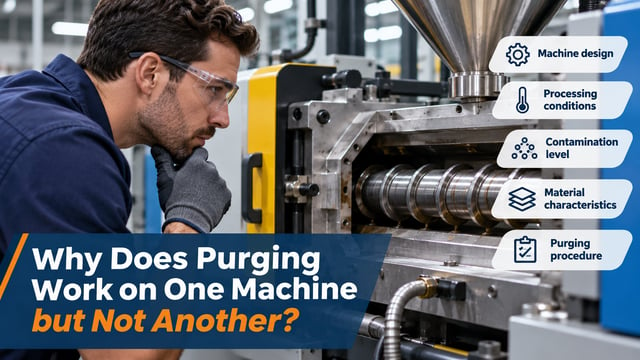
Purging results vary between machines because of differences in equipment design, processing conditions, resin characteristics, contamination levels, and purging procedures. Even when two machines use the same material and purging compound, they may require different approaches to achieve consistent results.
Understanding these differences can help plastics processors reduce scrap, shorten changeovers, and improve production efficiency.
Here are six factors that can affect purging performance.
1. Machine Design Affects How Well a Purging Compound Cleans
Not all injection molding machines or extruders are designed the same way.
Differences in screw geometry, barrel configuration, mixing sections, check rings, nozzles, and downstream equipment can influence how material flows through the system.
Some equipment configurations have areas where resin can accumulate or remain longer than intended. These low-flow areas can become sources of contamination, especially when processing heat-sensitive materials or running for extended periods.
For example, one injection molding machine may have a relatively straightforward screw and barrel configuration, while another has a more complex screw design or mixing section.
Even if both machines use the same purging compound, cleaning performance may differ because the material experiences different flow conditions.
What to check: Review the screw design, mixing sections, nozzle, check ring, and any areas where material may be accumulating.
2. The Amount of Existing Contamination Matters
Two machines can look identical from the outside but have very different contamination histories.
One machine may have a well-established preventive purging program. Another may have operated for months with limited cleaning, allowing degraded resin and carbon deposits to accumulate.
This difference can have a significant impact on purging performance.
A relatively clean machine may require a straightforward purge to remove residual color or material. A heavily contaminated machine may need additional cleaning or, in severe cases, mechanical maintenance.
When a purging compound begins removing older deposits, operators may initially notice more contamination being discharged from the machine.
That does not automatically mean the purge is ineffective. It may be removing contamination that was already present.
What to check: Consider the machine's maintenance history, frequency of purging, and whether contamination has been accumulating over time.
3. Processing Temperatures and Resin Characteristics Influence Results
Purging compounds must be selected and used within their recommended processing temperature ranges.
If a purging compound is not appropriate for the operating temperature or materials being processed, cleaning performance may suffer.
The characteristics of the production resin also matter.
For example, polypropylene, ABS, polycarbonate, nylon, and high-temperature engineering resins have different processing requirements.
A purge procedure that works well during a polypropylene color change may not deliver the same results when removing a more demanding engineering resin.
Viscosity differences between the outgoing resin, purging compound, and incoming resin can also influence how effectively material is displaced from the equipment.
What to check: Confirm that the selected purging compound is compatible with the processing temperature, resin transition, and equipment configuration.
4. Screw Speed, Back Pressure, and Processing Conditions Make a Difference
One of the most common reasons for inconsistent purging performance is variation in processing conditions.
Mechanical purging compounds rely on the cleaning action generated as material moves through the equipment.
In injection molding, screw speed and back pressure can affect the cleaning action inside the barrel.
In extrusion, screw speed, flow conditions, and pressure through the system can influence how effectively contamination is removed.
If one operator uses an established procedure and another uses substantially different settings, the results may vary even when the same purging compound is used.
However, more aggressive processing is not always better.
The appropriate settings depend on the purging compound, machine limitations, and the sensitivity of the materials being processed.
What to check: Compare actual purging settings between machines and follow the recommended grade-specific procedure, including appropriate safety limits.
5. The Same Purging Compound May Not Be Right for Every Application
Not every purging compound is designed to solve the same problem.
Some grades are developed for general-purpose color and material changes. Others are designed for more demanding contamination, high-temperature processing, or specialized equipment.
Asaclean® offers both mechanical and chemical purging compounds for different plastics processing applications.
For example, Asaclean® EX Grade is designed for aggressive screw and barrel cleaning and can be especially useful before planned screw pulls.
Its cleaning characteristics can help remove stubborn deposits, while the material can be removed more easily from the screw during maintenance.
However, EX Grade is not appropriate for every equipment configuration or downstream component.
Similarly, cleaning a hot runner system may require a different grade and procedure than cleaning a conventional screw and barrel.
What to check: Make sure the purging compound matches the application rather than assuming one grade will perform equally well on every machine.
6. Operator Procedures Can Create Inconsistent Results
Sometimes the biggest difference between two machines is not the equipment.
It is how the machines are being purged.
Consider two operators performing the same color change.
One follows a documented procedure that specifies the correct grade, temperature, operating conditions, and completion criteria.
The other relies on experience and continues feeding material until the purge appears clean.
Both approaches may eventually remove contamination, but the time, material usage, and overall costs can be very different.
This is why a standardized purging procedure is so important.
A good procedure should establish the correct steps for each machine and application while allowing for differences in equipment and processing requirements.
Consistency does not necessarily mean using identical settings on every machine. It means using a documented procedure appropriate for each application.
What to check: Compare procedures, operator training, purge quantities, and results across shifts.
How Do You Troubleshoot Inconsistent Purging Results?
If one machine is taking longer to clean than another, start by comparing the conditions rather than immediately increasing the amount of purging compound.
A practical troubleshooting approach includes:
- Compare the applications. Are both machines processing the same resin, color, and material transition?
- Review the equipment. Look for differences in screw design, machine condition, nozzles, and downstream components.
- Check the procedures. Compare processing temperatures, screw speeds, back pressure, purge quantity, and operator technique.
- Evaluate contamination history. Determine whether one machine has older deposits or recurring contamination problems.
- Verify the purging compound. Confirm that the grade is appropriate for both machines and their operating conditions.
- Measure the results. Compare changeover time, material consumption, scrap, and time to first good part.
If contamination continues despite a properly selected grade and procedure, the problem may extend beyond routine purging. Equipment wear, leakage, damaged components, or deposits in inaccessible areas may require additional inspection.
The objective is to identify the source of the problem instead of repeatedly using more material without understanding why results are inconsistent.
Frequently Asked Questions
Why does the same purging compound perform differently on two injection molding machines?
Different screw designs, processing temperatures, resin histories, contamination levels, and operating procedures can produce different cleaning results. Using the same purging compound does not guarantee identical performance.
Will using more purging compound improve cleaning?
Not necessarily. Additional material may be required when contamination is severe, but poor results can also be caused by incorrect processing settings, an unsuitable grade, or equipment problems. Identifying the underlying issue is generally more effective than simply increasing consumption.
Can screw speed and back pressure affect purging performance?
Yes. Both can affect cleaning performance, particularly when using mechanical purging compounds. Processors should follow the recommended procedures and operate within appropriate equipment and material limits.
Do different machines need different purging compounds?
Sometimes. Machines processing different materials, operating at different temperatures, or using specialized components may benefit from different grades or procedures.
What if contamination remains after purging?
Persistent contamination may indicate difficult-to-reach deposits, equipment wear, an unsuitable purge procedure, or a need for more extensive cleaning. Inspect the process and equipment before repeating the same unsuccessful procedure.
Get More Consistent Purging Results With Asaclean®
A successful purging program is about more than choosing a good cleaning material.
It requires the right compound, the right processing conditions, and a procedure that can be repeated consistently.
Asaclean® Purging Compounds help injection molders and extruders address contamination, reduce unnecessary scrap, and improve changeover efficiency.
Our Purging Experts can help evaluate your machines, identify the appropriate grades, and develop procedures tailored to your applications.
Getting different results across your machines?
Contact an Asaclean Purging Expert to discuss your application or request a free sample.
Need help standardizing your purge process? Talk with an Asaclean purging expert or use the Grade Selection Guide to identify the right starting point for your application.





Comments